Key takeaways
- Secure reliable court time and confirm local licensing, safeguarding and insurance requirements before accepting registrations.
- Begin with a small number of age and ability groups so your coaches, courts and equipment match actual demand.
- Use simple registration packages, clear payment instructions and a written first-season timetable.
- Review attendance, renewals, player numbers and parent feedback every month before expanding.
In this article
To start a basketball academy, secure suitable court time, confirm local licensing requirements, appoint reliable coaches, define age and ability groups, buy essential equipment and sell clear registration packages. Begin with a manageable first season, such as three groups meeting twice a week, rather than opening with too many sessions.
Your first decisions should protect safety, teaching quality and smooth administration. Speak with the relevant sports authority, municipality, federation and venue before advertising. Rules can differ across the UAE, Saudi Arabia, other Gulf countries and Europe, so check the current requirements for licensing, safeguarding, coach qualifications, insurance and medical procedures in your area.
How do I start a basketball academy with the right gym time?
Start by finding a court that is available at the same times every week and is suitable for the ages you plan to coach. Consistent access is more valuable than a larger venue that can only offer occasional bookings.
Ask each venue for:
- Hourly hire rates, deposits and cancellation terms
- Available weekday and weekend slots for a full season
- Number and condition of baskets, court markings and changing areas
- Air conditioning, lighting, toilets, drinking water and spectator access
- Rules for storage, photography, first aid and emergency access
- Written confirmation that the venue can host youth sports activities
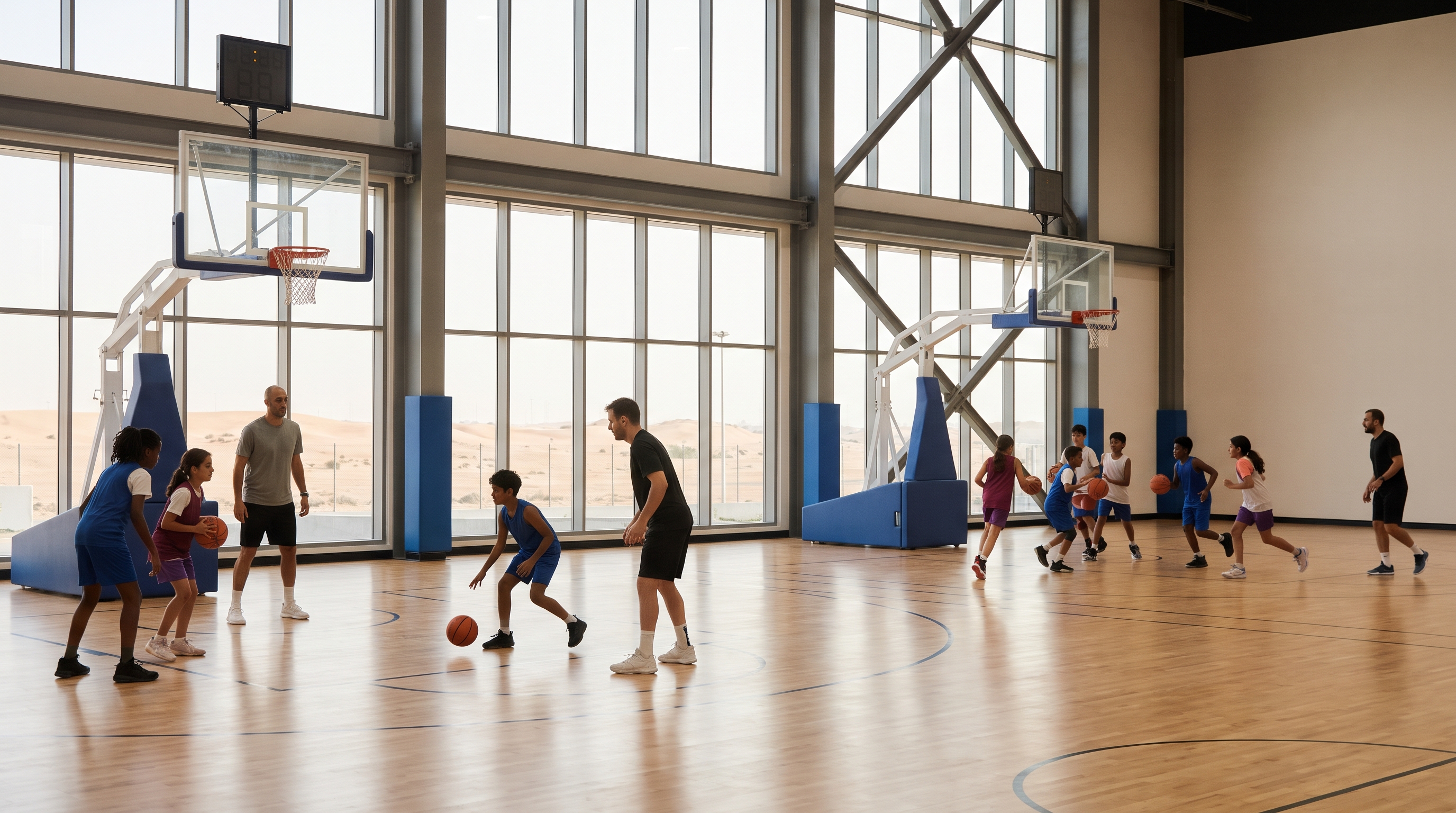
For a small launch, you might book a school or community gym on Tuesday and Thursday from 4:30pm to 8:30pm. Use the early slot for ages 7 to 9, the middle slot for ages 10 to 12 and the later slot for ages 13 to 16. Leave 15 minutes between groups for collection and setup.
Do not promise places until the venue has confirmed the dates in writing. Keep a backup option, such as a second indoor court or covered facility, especially where extreme heat, dust or seasonal weather can disrupt outdoor activity.
How do I choose basketball academy coaches?
Choose coaches who can teach children safely and patiently, not only coaches who played at a high level. Each group should have a named lead coach, a clear assistant arrangement and an adult responsible for attendance and communication.
For every candidate, check:
- Basketball coaching experience with the relevant age range
- Current qualifications required by your local authority or federation
- First aid, safeguarding and background-check requirements where applicable
- Availability for the complete season, including matches or assessment days
- Ability to explain drills simply and manage behaviour respectfully
- References from a previous club, school or sports organisation
A practical starting structure is one lead coach and one assistant for 10 to 14 beginners. For a group of 16 to 20, add another coach or reduce the activity into stations. For example, Coach Ahmed can teach ball handling to eight players while Coach Sara works with eight players on passing and footwork.
Give every coach a one-page operating brief covering arrival time, attendance, emergency action, parent collection, equipment checks and how concerns are reported. Run one paid trial session before the first season so you can observe punctuality, communication and player control.
How should I set basketball academy age groups and levels?
Use age as the first filter and ability as the second. Avoid placing every child born in the same year into one class if their experience, confidence and physical development are very different.
A simple opening structure could be:
| Group | Typical age | Suitable players | Weekly plan |
|---|---|---|---|
| Foundation | 7 to 9 | New players learning movement and basic ball control | 2 sessions of 60 minutes |
| Development | 10 to 12 | Players learning passing, shooting and small-sided play | 2 sessions of 75 minutes |
| Performance | 13 to 16 | Players ready for more tactical and competitive work | 2 sessions of 90 minutes |
Use a short assessment before assignment. Observe dribbling with both hands, stopping and starting, passing accuracy, listening, movement and confidence. Put the result in practical labels such as Foundation, Development or Performance rather than promising a permanent level.
Tell parents that groups may change after two or four weeks. A player can move up when the pace is too easy, or move down when a slower group will create better learning. Keep siblings and school friends together only when the group remains suitable for both players.
What basketball equipment does a new academy need?
Buy enough reliable equipment for players to stay active, but start with essentials rather than expensive extras. Your first purchase should support safe movement, repeated practice and quick setup.
For 24 players split across two groups, a useful starting list is:
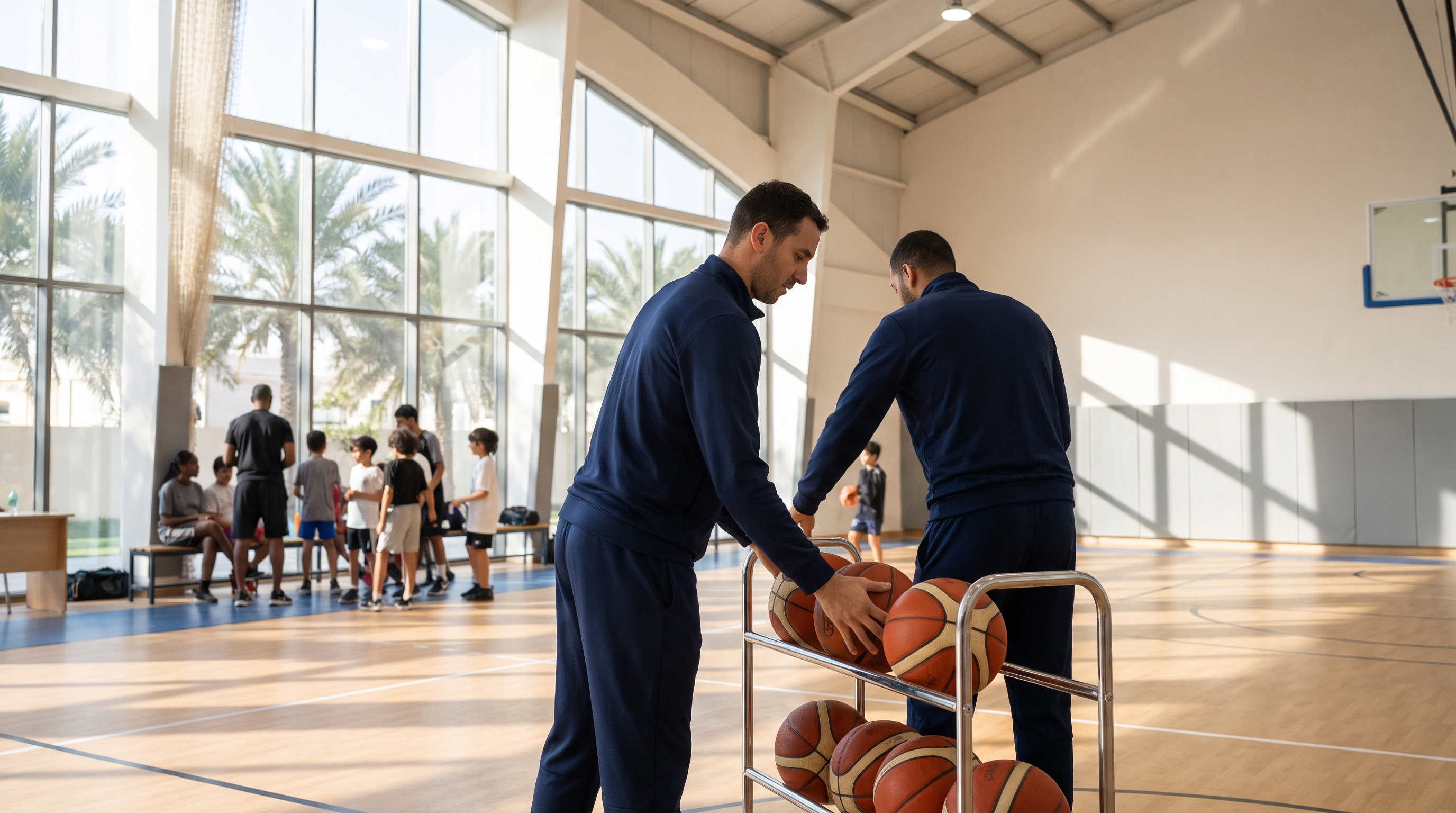
- 24 basketballs in the correct sizes for the players
- Four to six spare basketballs for replacements and drills
- Eight to 12 cones or floor markers
- Eight agility ladders or low hurdles, if suitable for the venue
- Two portable ball pumps and spare needles
- Training bibs in at least two colours
- A first-aid kit and charged phone for emergencies
- Coach clipboard, attendance list, whistle and timer
- Lockable bags or labelled storage containers
Confirm the ball size with your local federation or competition rules. Check every ball, basket and floor before the first session. Remove damaged equipment, keep walkways clear and set a routine for counting items before and after training.
Ask families to provide suitable sports clothing, indoor shoes, a water bottle and any required medical information. The academy should explain what it supplies and what the player must bring before registration.
How should I register players and sell basketball packages?
Use one registration process that collects the information needed to place, coach and contact each player. Keep the package choices simple enough for a parent to compare in one minute.
Your registration form should include:
- Player name, date of birth and emergency contact
- Parent or guardian contact details
- Previous basketball experience and preferred group
- Relevant medical, allergy or access information, handled securely
- Consent for participation and the academy’s communication rules
- Photo or media permission if you plan to use images
- Payment status, receipt and package selected
Offer two or three packages at launch. For example, a monthly package could include eight sessions, while a term package could include 24 sessions at a lower total price. You might also offer a one-time admission fee for administration and a sibling coupon, provided the terms are clear.
| Package | Includes | Best for |
|---|---|---|
| Monthly | Eight scheduled sessions | Families testing the timetable |
| Term | 24 scheduled sessions and priority renewal | Players attending consistently |
| Assessment session | One coached trial and level recommendation | New players unsure of the right group |
State the start and end dates, missed-session policy, cancellation terms, make-up rules and what happens when a package expires. Parents should know whether a missed session can be replaced and how much notice is needed to change groups.
A club management system can keep age groups, coaches, sessions, packages, receipts and reminders in one place. MyClubAcademy lets parents buy or renew a package in the app and upload a receipt for the academy to approve, with a reminder a week before the subscription ends. You can try MyClubAcademy for free while setting up your first season.
What should a basketball academy first season plan include?
Plan the first season around one clear launch timetable, monthly checks and a small number of measurable targets. Your aim is not maximum enrolment; it is safe, repeatable delivery that families understand.
- Weeks 1 to 2: Confirm licensing and venue documents, hire coaches, order equipment and publish the registration form.
- Weeks 3 to 4: Run assessment sessions, assign players to groups and send the timetable, kit list and arrival instructions.
- Weeks 5 to 8: Deliver regular training, record attendance and contact families when a player misses sessions repeatedly.
- Weeks 9 to 12: Hold a small internal festival or skills assessment, review coach notes and identify players who need a different group.
- Weeks 13 to 14: Review renewals, package performance, court costs, coach capacity and parent questions before planning the next term.
Track a short weekly dashboard:
- Registered players by group and available places
- Attendance by session
- Package expiry dates and unpaid or unapproved receipts
- Coach punctuality and cover needs
- Equipment problems and safety concerns
- New enquiries, trials and conversions to packages
Send a practical message before the first session: Welcome to the academy. Your player is booked into Development, ages 10 to 12, on Tuesdays and Thursdays at 5:45pm. Please arrive 10 minutes early with indoor shoes and water. The court is at Gym A. Contact Coach Ahmed through the academy if your child cannot attend.
Next step: write down your preferred age groups, two possible court slots, coach requirements and first-season capacity, then confirm them with the venue and local authority before taking registrations.
Frequently asked questions
How much money do I need to start a basketball academy?
There is no single amount because costs vary by location, court hire, coach pay, licensing, insurance, equipment, marketing and administration. List these costs for your planned timetable and ask a qualified local accountant or business adviser to review your plan. Do not advertise or accept registrations until you understand the relevant local requirements.
Do I need a basketball federation qualification to open an academy?
Requirements vary by country, emirate, city and federation. Check with your local sports authority and basketball federation about coach qualifications, business registration, venue approval, safeguarding, first aid and insurance before launching.
Should I offer free basketball trials?
A short assessment or introductory session can help families understand the academy before they buy a package. Set a clear limit, such as one trial per player, record the player’s age and level, and explain the next available package afterwards.
When should a basketball academy add more locations?
Wait until your first location has reliable attendance, consistent coaching and enough demand for another timetable. A second venue should have a named lead coach and an operating plan rather than depending on the founder to solve every issue.
MyClubAcademy
Put this into practice at your club
MyClubAcademy brings players, coaches, training sessions, QR attendance, subscriptions and chat into one admin panel, with iOS and Android apps for coaches and families.